Account equity
Also called Equity, Trading account equity, Account value
Account equity is what your trading account is worth right now: your balance plus the floating profit or loss on every open trade. With no trades open, equity and balance are the same number.
Your broker checks equity, not balance, when it decides whether your open trades can stay open. If you read the wrong number, you size the next trade from money you may already have lost.
The account equity formula
Equity = Balance + Floating profit/loss on open trades
Balance is the result of deposits, withdrawals and closed trades only. Floating profit/loss (also called unrealized P/L) is what your open trades would add or remove if you closed them at the current price.
Two details are often missed. Floating P/L includes swap charged so far; commission is either shown there too or taken from balance at entry, depending on your broker. Either way equity already reflects it. And if your broker gave you a bonus credit, it is added too: Equity = Balance + Credit + Floating P/L.
On your trading platform, equity sits next to balance in the account summary and updates on every tick.
Working out equity on a 500, 5,000 and 50,000 USD account
The figures below are an illustrative example on EUR/USD, where one standard lot (100,000 units) moves 10 USD per pip.
500 USD account, one losing trade
- Position: 0.05 lots, so each pip is 0.05 × 10 = 0.50 USD.
- Price is 30 pips against you: 30 × 0.50 = 15 USD floating loss.
- Equity = 500 - 15 = 485 USD.
5,000 USD account, two trades
Trade 1 is 0.20 lots (2 USD per pip) and sits 50 pips in profit. Trade 2 is 0.30 lots (3 USD per pip) and sits 40 pips in loss. The calculation below works out the equity.
50,000 USD account, one winning trade held overnight
- Position: 2.00 lots, so each pip is 20 USD.
- Price is 60 pips in your favour: 60 × 20 = +1,200 USD.
- Swap charged so far: -30 USD. Floating P/L = 1,200 - 30 = +1,170 USD.
- Equity = 50,000 + 1,170 = 51,170 USD.
Quick reference: which number to size the next trade from
Use this rule: size the next trade from the lower of balance and equity. If equity is below balance, the loss is already real enough to count. If equity is above balance, the profit is not banked yet, so do not risk more because of it.
| Account | Balance | Floating P/L | Equity | 1% risk in USD |
|---|---|---|---|---|
| Small | 500 | -15 | 485 | 4.85 (from equity) |
| Medium | 5,000 | -20 | 4,980 | 49.80 (from equity) |
| Large | 50,000 | +1,170 | 51,170 | 500.00 (from balance) |
How equity decides whether your trades stay open
The table above is about your next trade. For the trades already open, equity matters in a second way. Margin (or used margin) is the part of your account the broker sets aside as a deposit while your trades are open. Free margin is equity minus used margin: what is left to open new trades or absorb more loss. Margin level is equity ÷ used margin × 100.
Take the 500 USD account above and say its trade ties up 100 USD of margin. Free margin = 485 - 100 = 385 USD. Margin level = 485 ÷ 100 × 100 = 485%.
Both numbers are built on equity, so a growing floating loss pulls them down while your balance does not move. If margin level falls to the level your broker sets, the broker starts closing your trades automatically. That automatic close is called a stop out.
You can work out how far price can move against you before a stop out. Brokers set their own stop out levels. For this illustrative example, say the level is 50% and the 500 USD account still has 100 USD of used margin:
- Equity at stop out = 50% × 100 = 50 USD.
- Room before stop out = 485 - 50 = 435 USD.
- Pips of room = 435 ÷ 0.50 per pip = 870 pips.
Use this rule: if the pips of room are fewer than the distance to your stop loss, the stop out will close the trade before your stop loss is hit. Cut the position size until the room is bigger than your stop distance.
Why equity shows dips that balance hides
Balance only moves when a trade closes. Equity moves with every price tick. A trade can sink deep into loss, recover and close in profit, and the balance line will never show that the dip happened.
The drawing below shows one such trade: the balance stays flat while equity drops, then both meet again at the close.
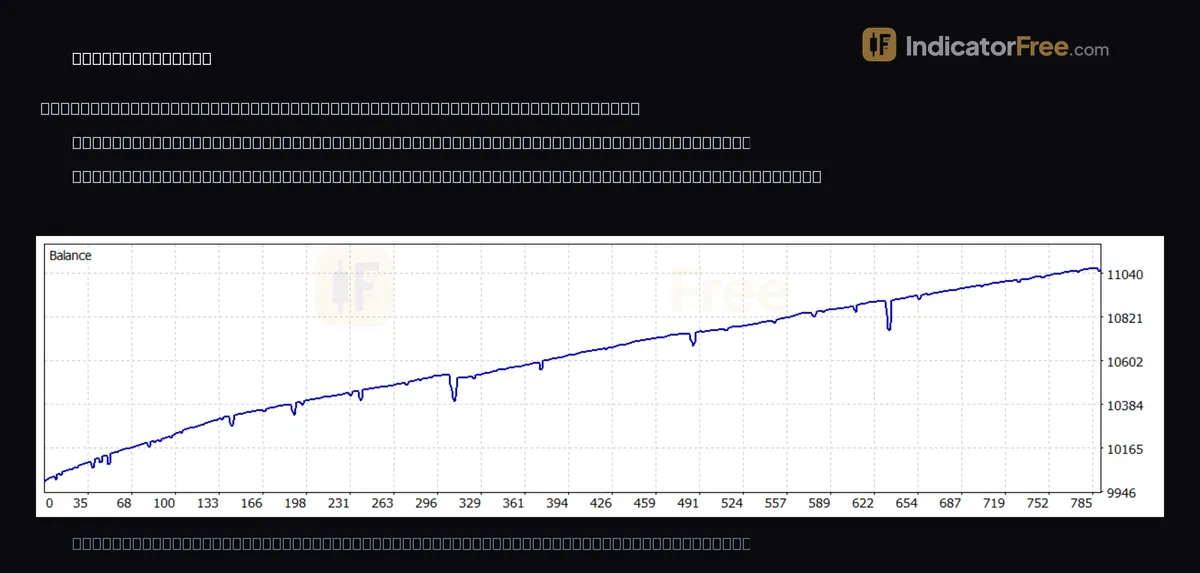
The same hidden gap shows up in real strategy test reports. In one past test, an automated strategy traded gold (XAUUSD) on the 15-minute chart from 24 March to 24 July 2026 and took 394 trades. Its maximum balance drawdown was 147.39 (1.35%), while its maximum equity drawdown was 463.88 (4.40%). The bars figure below compares the two.
In any strategy report, judge the risk by the equity drawdown, not the balance drawdown. In this test it was about three times deeper. This is a past result, not a prediction.
Equity mistakes that cost money
- Forgetting overnight costs. Swap on a trade held for many days keeps lowering equity even when price has not moved.
- Watching only one trade. Equity is the sum of all open positions, so several small losers can hurt it more than the one trade you are staring at.
- Ignoring spread widening. At the daily rollover or around news, the spread (the gap between buy and sell price) widens. Open trades are valued at the price you could close them at, so equity drops with no real price move.
- Assuming a hedge freezes equity. Holding a buy and a sell on the same pair cancels out price moves, but you pay the spread on both trades and swap can still be charged each night.
FAQ
Can my account equity go below zero?
Yes. Your stop loss is set at a price, and the stop out triggers at a margin level. When the market gaps, both can be filled well past that point, at the next available price. The floating loss can then exceed your balance. Whether you owe the difference depends on whether your broker offers negative balance protection, so check your account terms.
Do funded account loss limits count floating losses?
It depends on the program's rules. If the limit is measured on equity, an open trade in loss can break the rule even though you never closed it. Read the rule sheet for the word "equity" or "balance" before you trade.
Why did my equity drop the moment I opened a trade?
A new trade opens at one price but is valued at the price you could close it at. The gap between the two is the spread, so every trade starts with a small floating loss. Price has to move in your favour by the spread before equity is back level with balance.