Balance
Also called Account balance, Ledger balance, Closed balance
Balance is the money in your trading account counting only closed trades, deposits, withdrawals and charges the broker has booked. It ignores the profit or loss on positions that are still open.
Your balance can show a gain while the account is really worth less, because an open loss is not in it yet.
How balance is calculated (and how equity differs)
Commission is the broker's fee for a trade. Swap is the overnight financing on a position held past the daily rollover. A swap charge is subtracted from balance, and a swap credit is added to it.
Floating means the profit or loss on a trade that is still open, so it keeps changing with price.
Balance = Deposits - Withdrawals + Closed profit - Closed loss - Commission +/- Booked swap +/- Adjustments (corrections, fees, bonus if added to balance)
Equity  = Balance + Floating profit or loss on open trades
Equity is what the account would be worth if you closed everything right now. With no open trades, balance and equity are the same number.
| Line | What it counts | When it moves |
|---|---|---|
| Balance | Deposits, withdrawals, closed trades and booked charges | When cash goes in or out, a trade closes, or the broker books a charge or adjustment |
| Equity | Balance plus floating profit or loss | With every price change while a trade is open |
| Margin | The deposit the broker sets aside to keep your open trades running | Mainly when you open or close a position |
| Free margin | Equity minus margin, the amount left for new trades | With every price change, and when margin changes |
Your platform shows balance in the account summary line, next to equity, margin and free margin. The account history lists each of those entries, so you can rebuild the balance line by line with the formula above.
Balance vs equity worked out step by step
The figures below are an illustrative example. A 5,000 USD account closes one winning trade and one losing trade, pays commission and a swap charge, and then holds one trade that is currently losing.
The balance says you are up 1.8% ($90 on $5,000). The equity says you are down 10% ($500 on $5,000).
A decision rule you can copy: size the next trade from whichever is lower, balance or equity. If equity is below balance, you are carrying an open loss and the balance figure overstates what you have.
Your broker watches equity, not balance. Margin level = equity ÷ margin × 100. When it falls to the broker's stop out level, the broker closes your trades. Margin calls (the broker's warning that margin level is getting low) and stop outs both work from this number, so an open loss can trigger them even though your balance looks healthy.
A quick check before each new order:
- Read balance and equity together.
- If they differ, find the open trade causing the gap.
- If the gap is bigger than your planned risk on one trade, deal with the open trade before adding a new one.
Balance drawdown vs equity drawdown in a real backtest
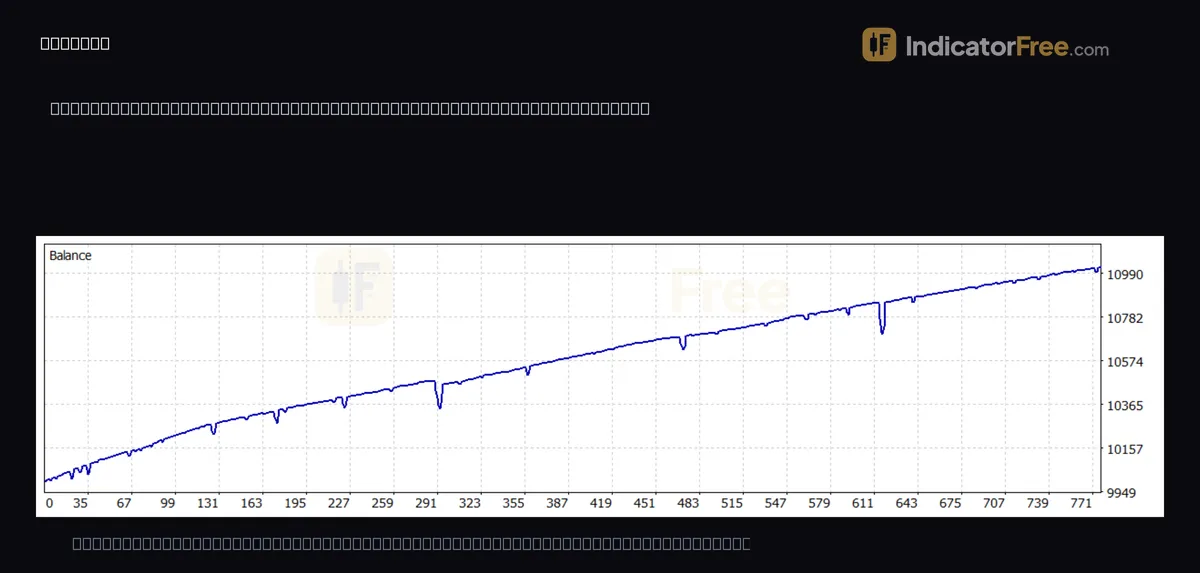
The backtest at the top of this page is an automated strategy on XAUUSD, 15-minute chart, 2026.03.25 - 2026.07.25, 387 trades. Maximum balance drawdown was 147.37 in account currency (1.36%). Maximum equity drawdown was 463.88 (4.42%). The stepped drawing below shows how such a gap forms while a losing trade stays open.
The maximum equity drawdown was about three times the maximum balance drawdown. If equity drawdown is several times balance drawdown, the strategy lets open trades sit in deeper loss than its closed results show. This is a past example, not a prediction.
When you judge any strategy report, read the equity drawdown first.
Balance mistakes that cost money
- Holding a loser to keep the balance "clean". The loss already exists in your equity. Closing only records it.
- Counting a broker bonus as your own money. Depending on the broker, bonus money is shown as a separate credit line or added straight to balance. Either way, it is often not withdrawable under the broker's terms, so leave it out when you size trades.
- Forgetting costs. Commission, and swap when it is a charge, reduce balance even on a trade that closed at your entry price.
- Treating a withdrawal as a loss. Balance drops, but your trading result did not change. Track performance on closed profit and loss, not on balance alone.
FAQ
What is initial balance in trading?
It is the starting amount before any trade is taken: your first deposit on a live account, or the starting deposit entered for a backtest. Net profit and return are measured from this starting figure.
Why did my balance change when I did not close a trade?
The broker booked an entry that is not a closed trade. Some brokers charge commission when the trade opens, some book swap to the balance each night, and a broker can post an adjustment such as a correction or a fee. Find the line in your account history to see which one it was.
What is a negative balance in trading?
It means closed losses were larger than the money in the account, usually after a price gap closed your trades far beyond the stop out level. You then owe the broker the difference unless the broker's terms or your regulator provide negative balance protection. Check this in your account agreement before you trade with leverage.