Balance drawdown
Also called Balance DD, Closed-trade drawdown, Maximal balance drawdown, Relative balance drawdown
Balance drawdown is the drop from your highest closed balance to the lowest closed balance before a new high, counting closed trades only. (Peak − low) ÷ peak × 100 gives it as a percentage. Open positions are ignored, so a floating loss does not show in it until the trade is closed.
If you size your account from this number alone, you can run out of margin during a loss the report never showed. Balance drawdown is useful for judging closed results, and risky as the only number you use to decide how much money a strategy needs.
Working out balance drawdown on a $10,000 peak
The figures in this section are an illustrative example. You start with $5,000. Closed trades lift the balance to a peak of $10,000. A losing run then takes the balance down to $8,000 before it recovers. Balance drawdown is given in money, as a percentage of that peak, or both.
Note the last line of the calculation. A 20% fall needs a 25% gain on the $8,000 low to repair, because the gain is earned on a smaller balance.
Two misreads are common here:
- Dividing by the deposit. $2,000 ÷ $5,000 gives 40%, which is wrong. Drawdown is measured against the peak, not the starting money.
- "I am still in profit, so there is no drawdown." At $8,000 you are $3,000 above your deposit and still in a 20% drawdown.
Why equity drawdown can be deeper than balance drawdown
The number to compare it with is equity: the balance plus or minus the result of trades still open.
Stay with the same example. At the worst moment, open trades were carrying a further $500 floating loss, so equity touched $7,500.
Equity drawdown is then $10,000 - $7,500 = $2,500, and $2,500 ÷ $10,000 = 25%. The balance figure said 20%. The chart below shows both lines over the same period. It covers only the stretch around the $10,000 peak, not the climb from the $5,000 start.
Use the gap between the two numbers as a test of how a strategy handles losers:
- If the two figures are close, losing trades are being closed quickly. The balance figure is a fair picture of the pain.
- If equity drawdown is much larger, the strategy holds losing trades open, as grid and averaging systems do. Plan your account size from the equity figure.
- If balance drawdown is tiny but equity drawdown is large, treat the report as a warning. A balance curve that almost never drops can mean the strategy never closes its losers, not that it is safe.
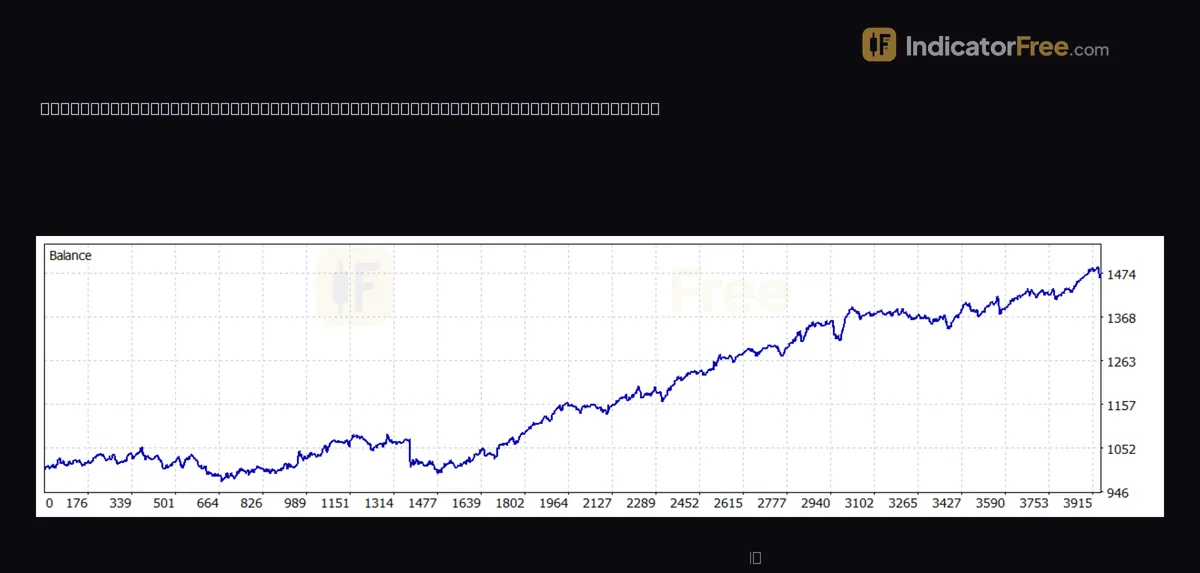
The backtest report at the top of this page is a past example, not a prediction. It covers an Expert Advisor (an automated trading program) on XAUUSD, 1-minute chart, from 2026.07.27 to 2026.09.27, with 1966 trades. Maximum balance drawdown was 94.79 (8.73%) and maximum equity drawdown was 95.07 (8.75%), both in the account's deposit currency. The two maximums can come from different moments of the test, so they do not show how open trades behaved all the way through. What they do show is that at its worst point, open trades added little on top of closed losses (0.28 in deposit currency).
Checking a prop firm drawdown limit: balance or equity, start or peak
Stay with the same example and suppose a prop firm rule limits the drop to 22%, measured from the highest balance. From the $10,000 peak that is 22% × $10,000 = $2,200, so the floor is $10,000 - $2,200 = $7,800. Two details of the rule decide whether you broke it.
Balance or equity. The balance fell $2,000, which is inside $2,200. Equity fell $2,500, which is outside it. A limit counted on balance is not hit by the floating $500. A limit counted on equity is hit, even though that $500 was never closed.
Starting balance or highest point. A limit fixed at the start is measured from the $5,000 deposit: $5,000 × 0.78 = $3,900, far below both lows. The $7,800 floor in this example comes from a trailing limit, measured from the $10,000 peak. A trailing floor moves up when the balance makes a new high, and rules do this in one of two ways:
| Trailing rule | Floor after the balance reaches $12,000 |
|---|---|
| A fixed $2,200 below the peak | $12,000 - $2,200 = $9,800 |
| 22% below the new peak | $12,000 × 0.78 = $9,360 |
The two floors end up $440 apart. Check which one your rule uses before you work out your room to lose.
The levels below show the trailing $7,800 floor, 22% below the $10,000 peak, next to the two lows. The balance low stays above the floor, while the equity low falls through it.
The decision rule:
- If the limit counts equity, watch equity while trades are open, not the balance.
- If the limit is measured from the highest point, your floor moves up with every new high, so recalculate it after each one.
- If the limit is daily, check it the same way, from that day's starting balance or starting equity.
Finding the balance drawdown line in a backtest report
You do not set balance drawdown. Your trading platform calculates it and prints it in the report after a backtest, usually next to the equity version. Many reports list three variants:
| Report line | What it measures | Use it for |
|---|---|---|
| Absolute | How far the balance fell below the starting deposit | Seeing if the test ever went under your initial money |
| Maximal | The largest drop from a peak, in money | Seeing the worst closed-loss run in money |
| Relative | The largest drop from a peak, in percent | Comparing tests run on different deposits |
Maximal and relative can come from two different losing runs. A money drop late in a test, on a larger balance, can be a smaller percentage than an earlier drop.
If your platform does not show a running drawdown on a live account, write down each new balance high and repeat the calculation above.
Checks to run before you trust a balance drawdown figure
- Check whether the test ended with trades still open. Their floating loss is not in the balance figure.
- Look at the deposit used in the test. The same money drop on a smaller deposit is a bigger percentage.
- Check the trade count and the test period. A short test may not contain the strategy's worst losing run.
- Size the account from the larger drawdown in money, at the trade size you plan to use. Divide it by the largest fall you accept. In the example, equity fell $2,500. If you accept a fall of no more than 20%, you need at least $2,500 ÷ 20% = $12,500. Add a buffer on top, because the past maximum can be beaten.
FAQ
Does a deposit or withdrawal change my balance drawdown?
A withdrawal lowers the balance, but it is not a trading loss. A deposit raises the balance without being a trading gain, so it should not create a new peak. If you track drawdown by hand, adjust your recorded peak by the amount you moved, so that only trading results are measured. Platform reports may count deposits and withdrawals as balance changes, so check how yours treats them.
Does balance drawdown reset when my balance makes a new high?
Yes. At a new high the current drawdown is zero, and the next one is measured from that new peak. The maximum in a report does not reset: it keeps the largest drop seen over the whole test.
Do swap and commission count in balance drawdown?
Yes. Costs charged on a closed trade lower the balance, so they are part of the drop. Swap building up on a trade that is still open shows in equity first.